


Approximately 7 minutes read
September 2019- December 2019
Project overview and goal
Hiamo is a Wellington based startup company looking at ways to use Augmented Reality (AR) to tell historical stories. Hiamo aims to teach people about history by sharing stories from the past. This is a relatively new area and Hiamo would need to learn more about what end users (people visiting the sites) and customers (site managers) would want from this technology. The project goal was to increase the app engagement and the user retention rate for the early adopters using the app.
My role and the wider team
I worked on the UX/UI side of things and the other members included a graphic designer, three software developers and the product owner.
Organisation big vision
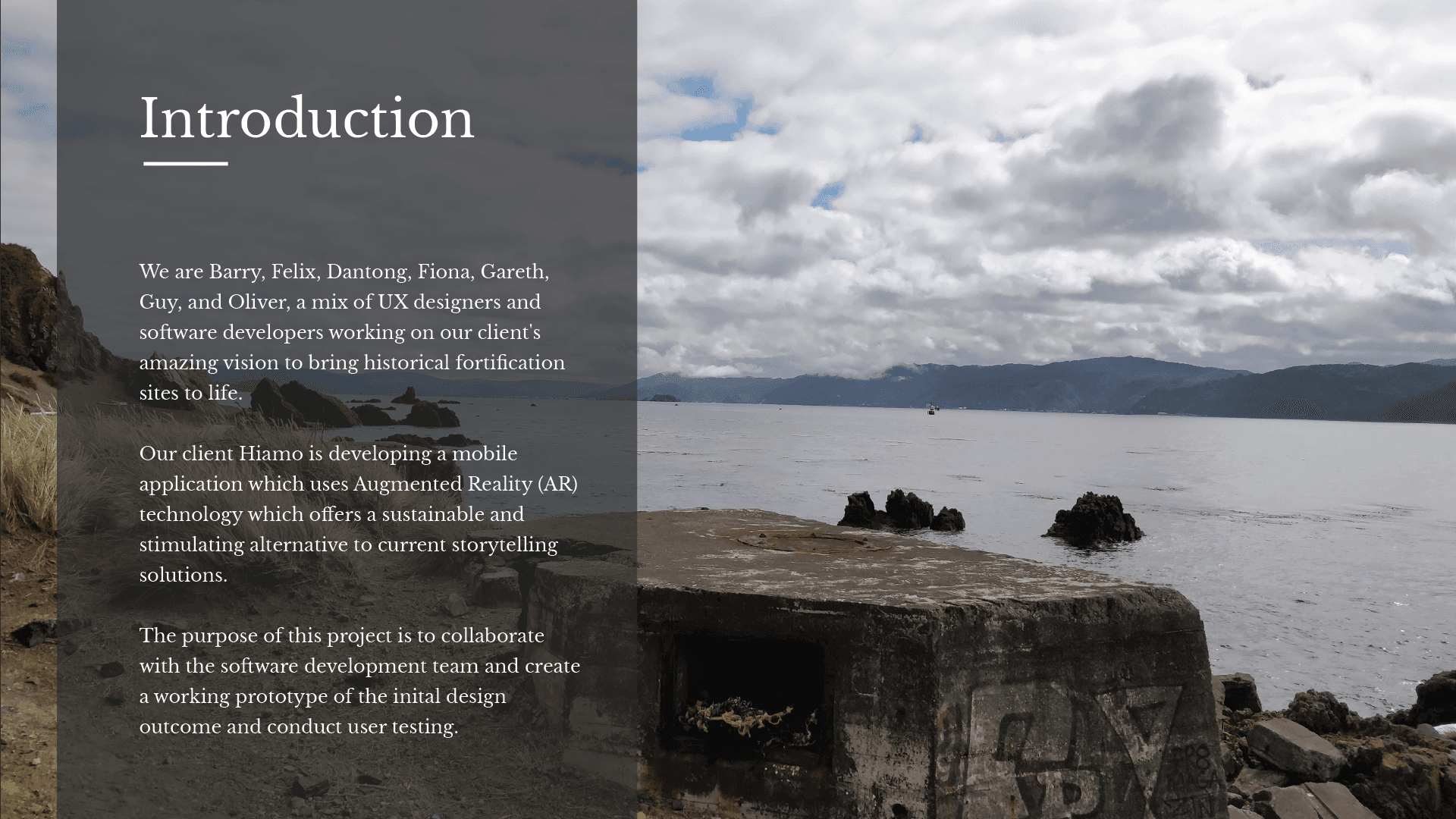
To help users learn and experience about New Zealand's historic sites by using latest AR technology and story telling techniques.
Design Process
We adopted the five day 'design sprint' technique. The Design thinking framework we followed was Double Diamond.

Discovery phase- Qualitative research
We conducted a survey to identify the user needs and goals to find pain points and opportunities. The responses to all the answered survey questions can be found here;
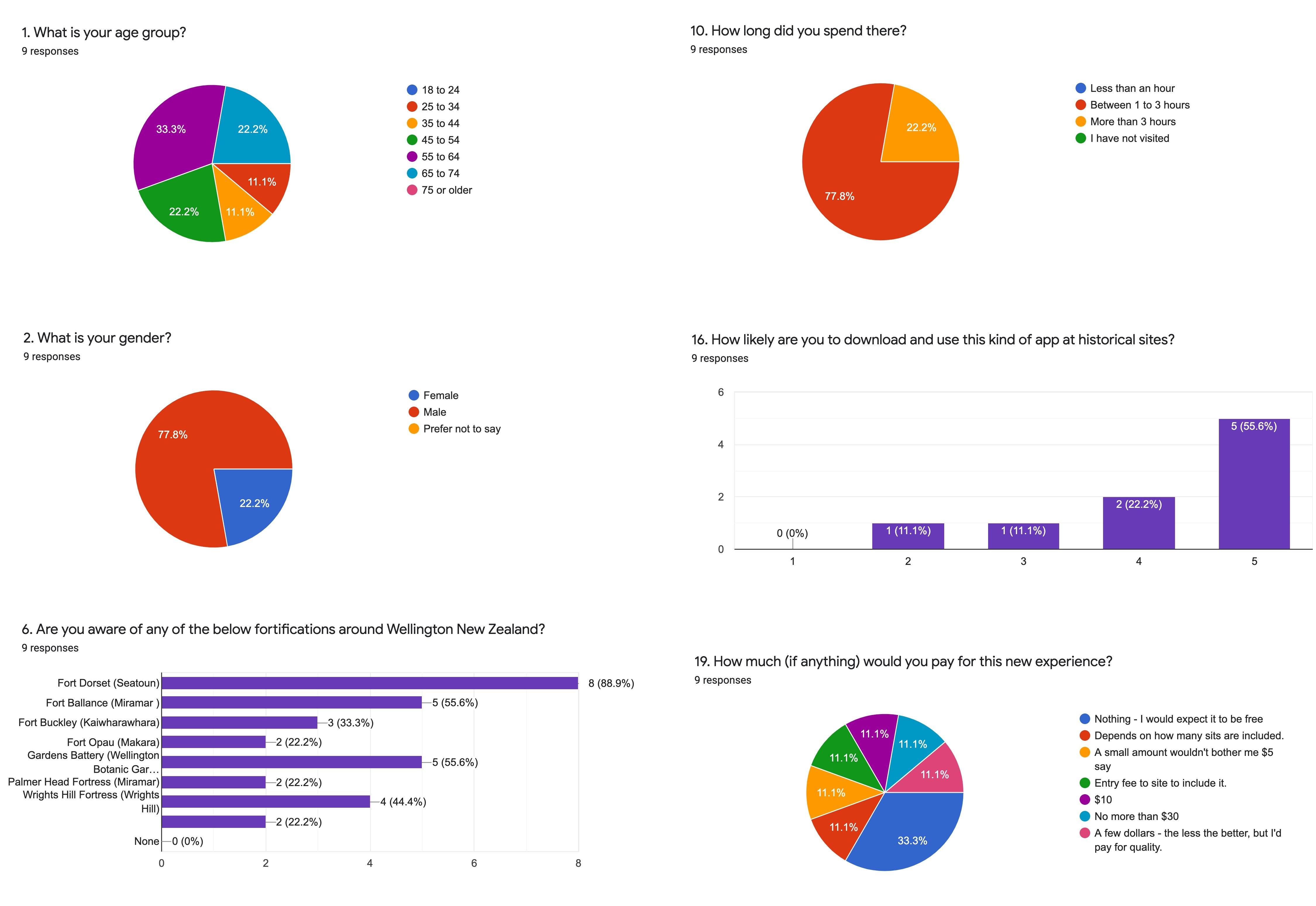
Some insights from the data
User goal
Users want to visit and learn about historic sites to relive and experience the historic events from the past.
Business goal
Identify, engage and retain early adopters to roll out the MVP and create initial user base.
User need statement
Chris is an avid traveller and a backpacker who has recently moved to Wellington, New Zealand and he wants to learn about the Kiwi culture in order to appreciate history and learn from the past.
Outcome
We were successfully able to get the most important things that was required to proceed with the next phase;
Understanding user group
User needs
Clear problem statement
Define phase
Based on the research and the user need statement we created persona and created user journeys
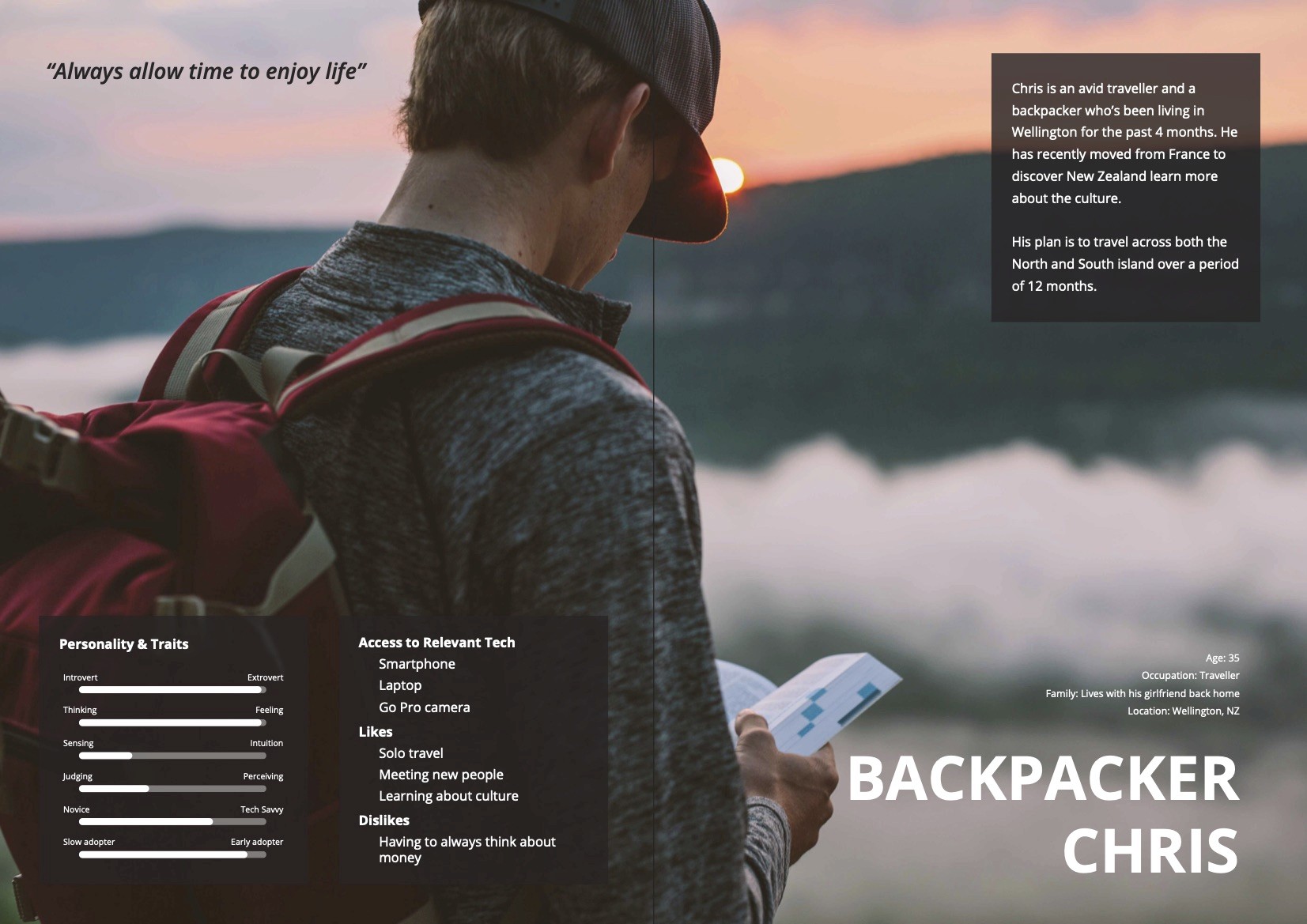
User Persona
Journey mapping
Journey mapping helped gain lots of insights and identify goals and users touch points.
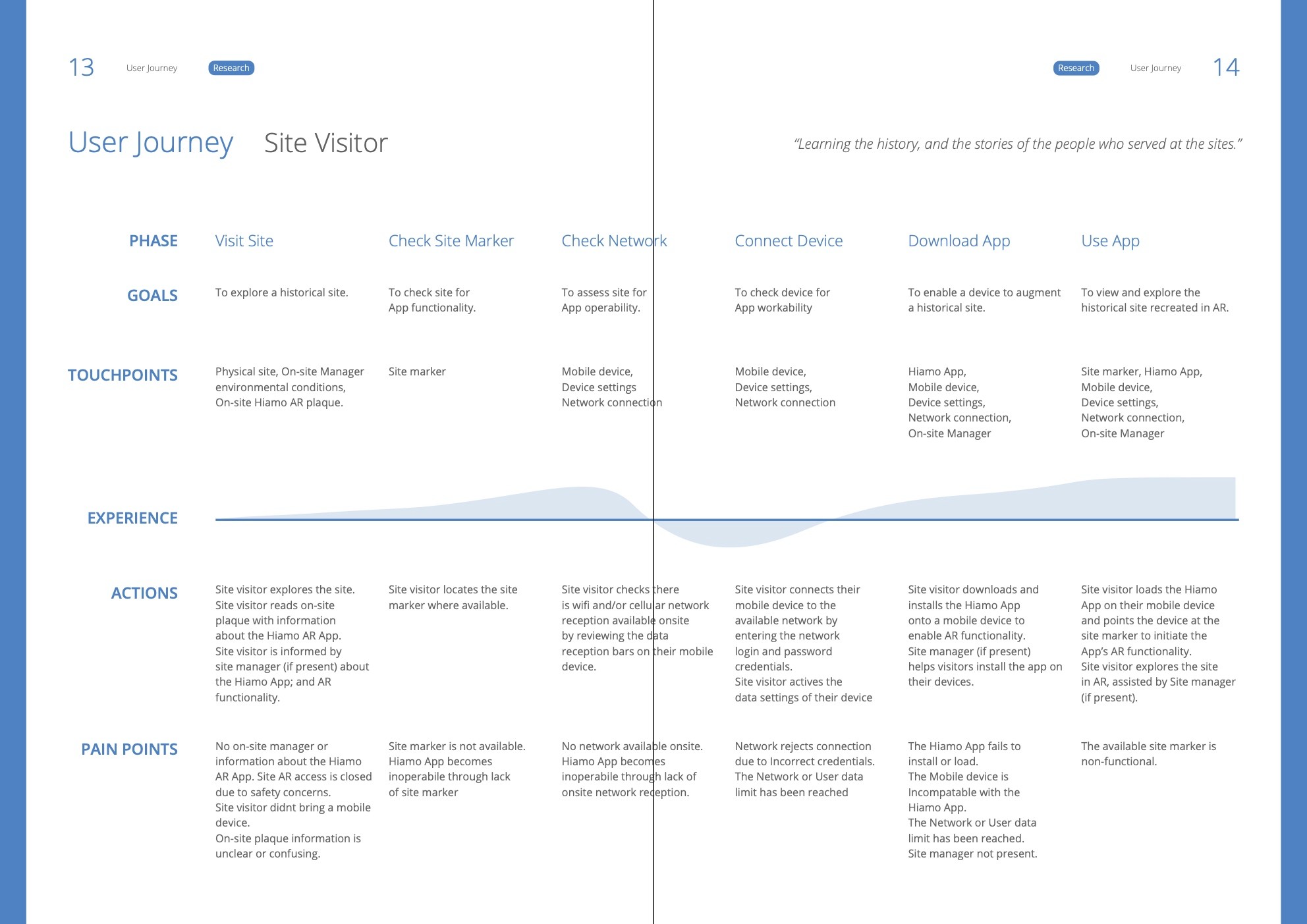
User journey

Affinity Mapping to create themes
Information Architecture
Outcome
The Minimum Viable Product (MVP) is the solution with the least number of features in order for the product to be successful. From the affinity mapping insights, the MVP should have such features
Story telling aspect
Concise but informative onboarding
Visuals and easy to read navigation
Seamless and accurate AR experience
Design phase
Creating user scenarios
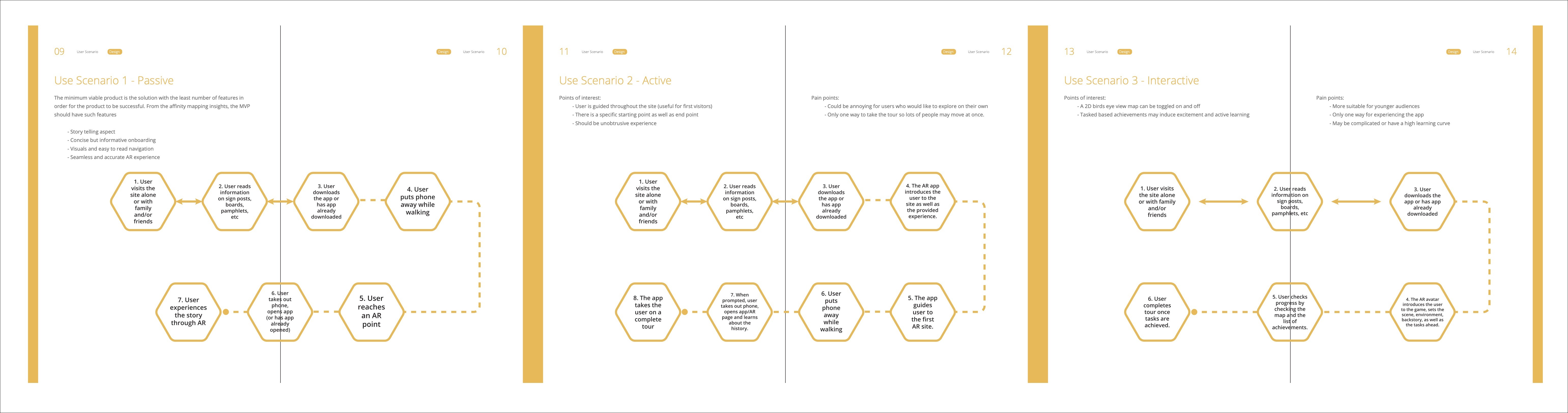
User case scenarios
Design features
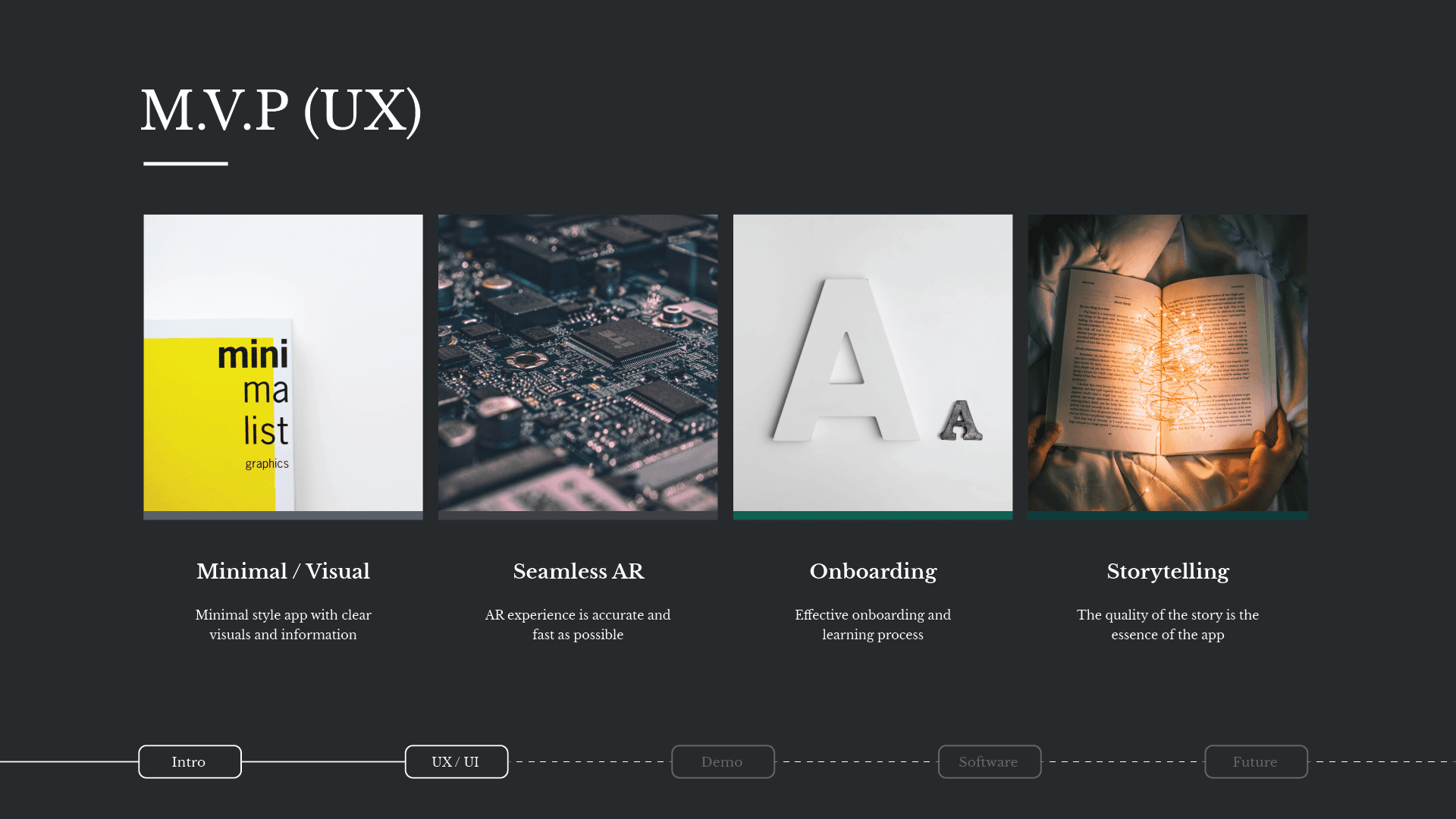
MVP approach and features
Low fidelity designs
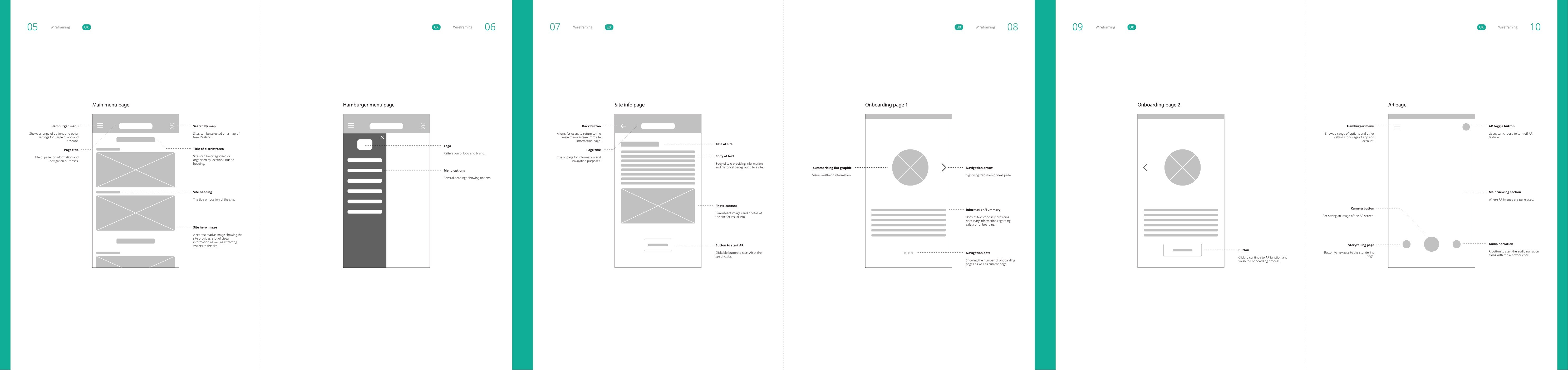
Low fidelity images
User testing
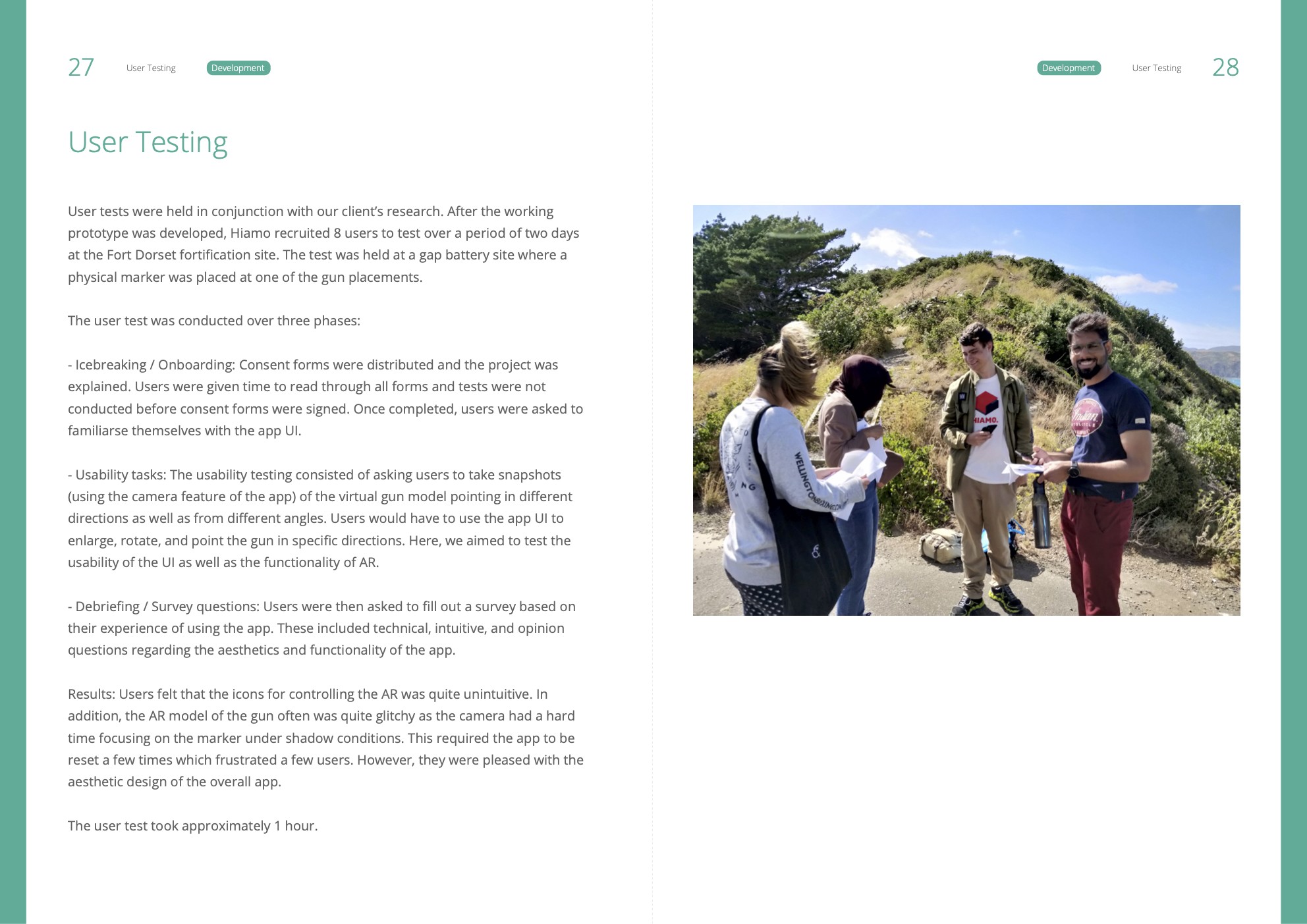
User testing and reflections
User Interaction and visual design
The below video demonstrates High fidelity screens of the dashboards
Deliver
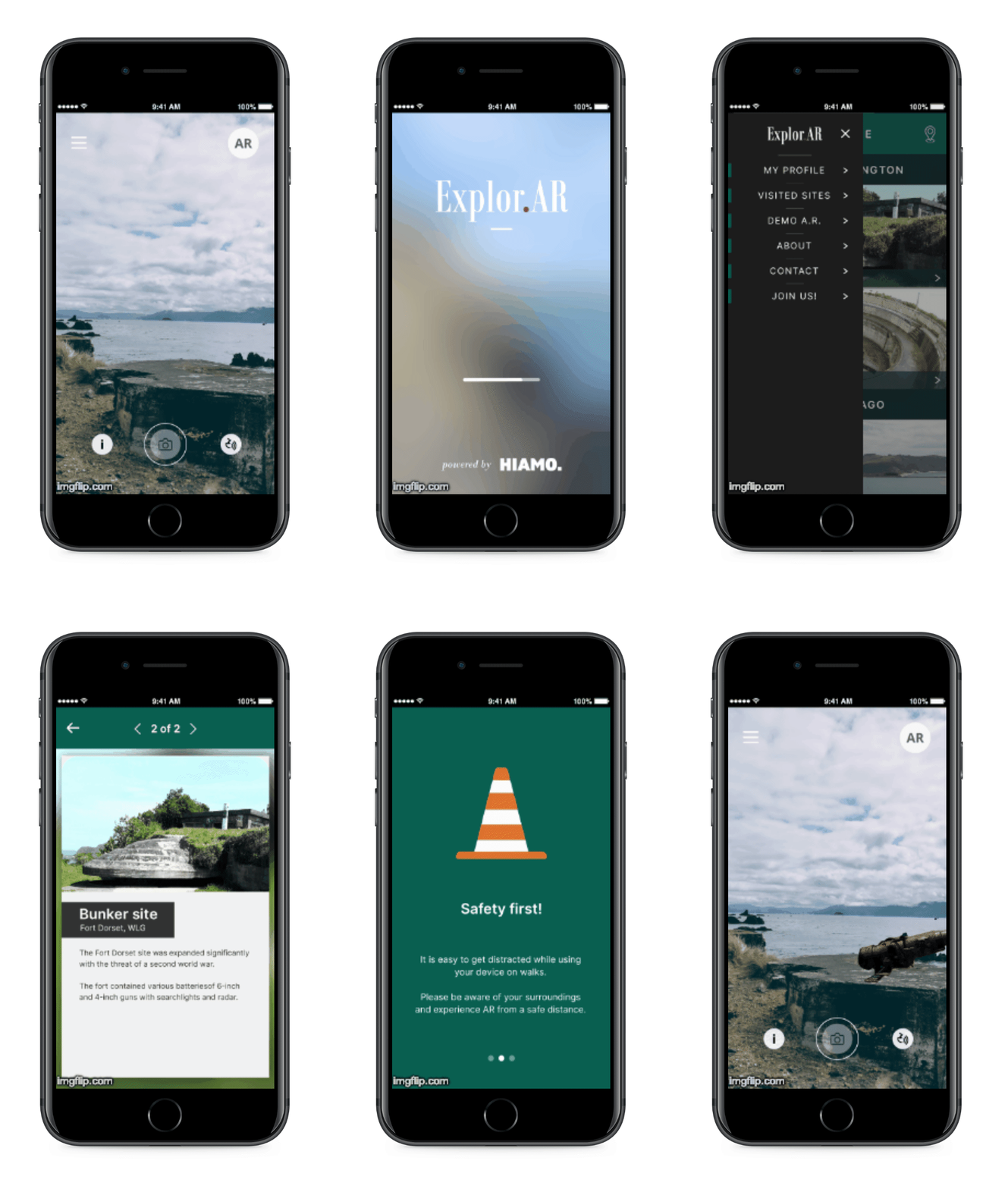
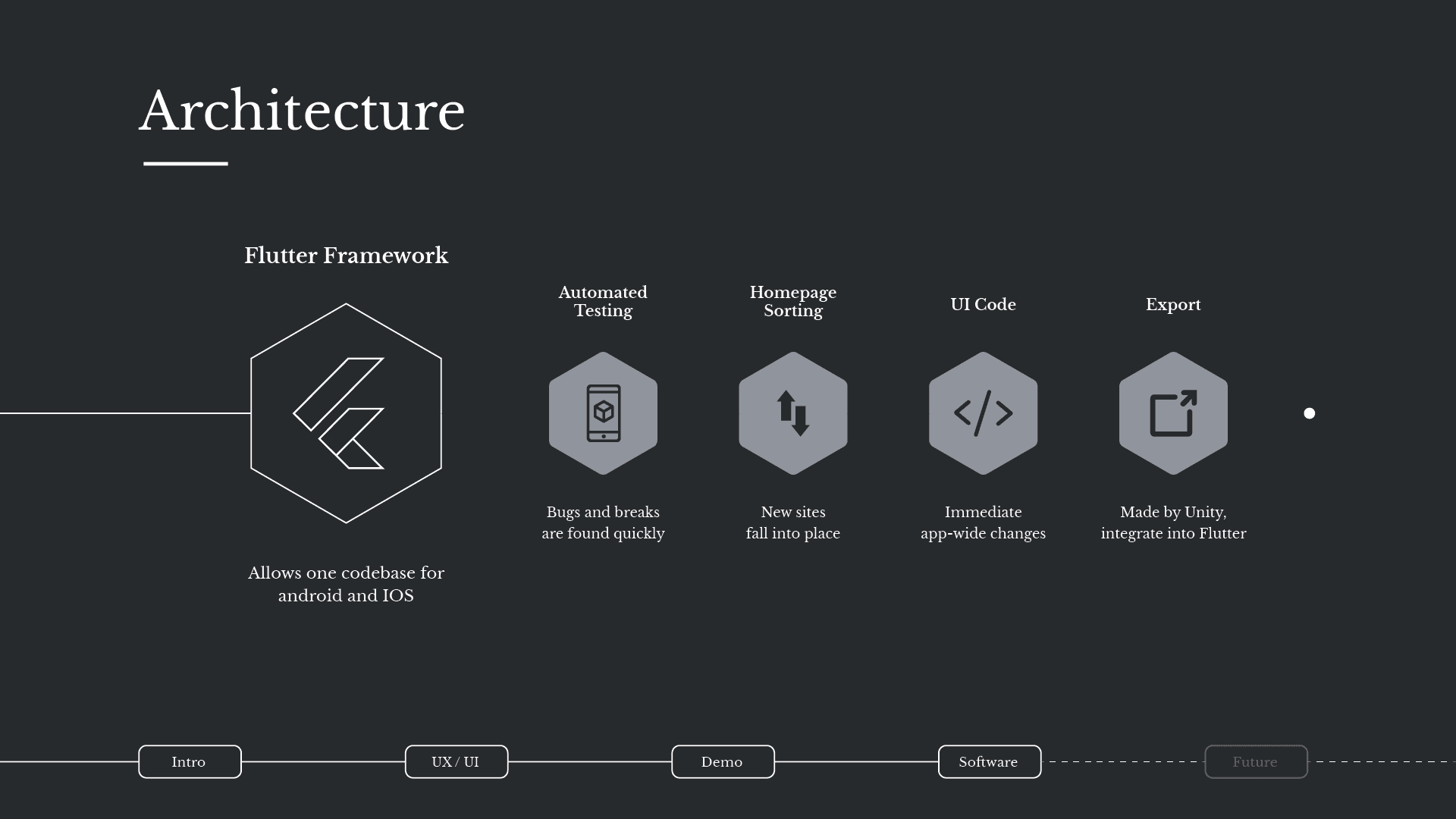
The designs were handed over to the developers. The app's front end is created on flutter with Unity game engine.
Project learnings
One of the biggest limitations to this project was the time constraint. Due to the large scope of the app, there were only a few features that we could implement. This required us to prioritise and effectively estimate what we were capable of achieving in three weeks.


